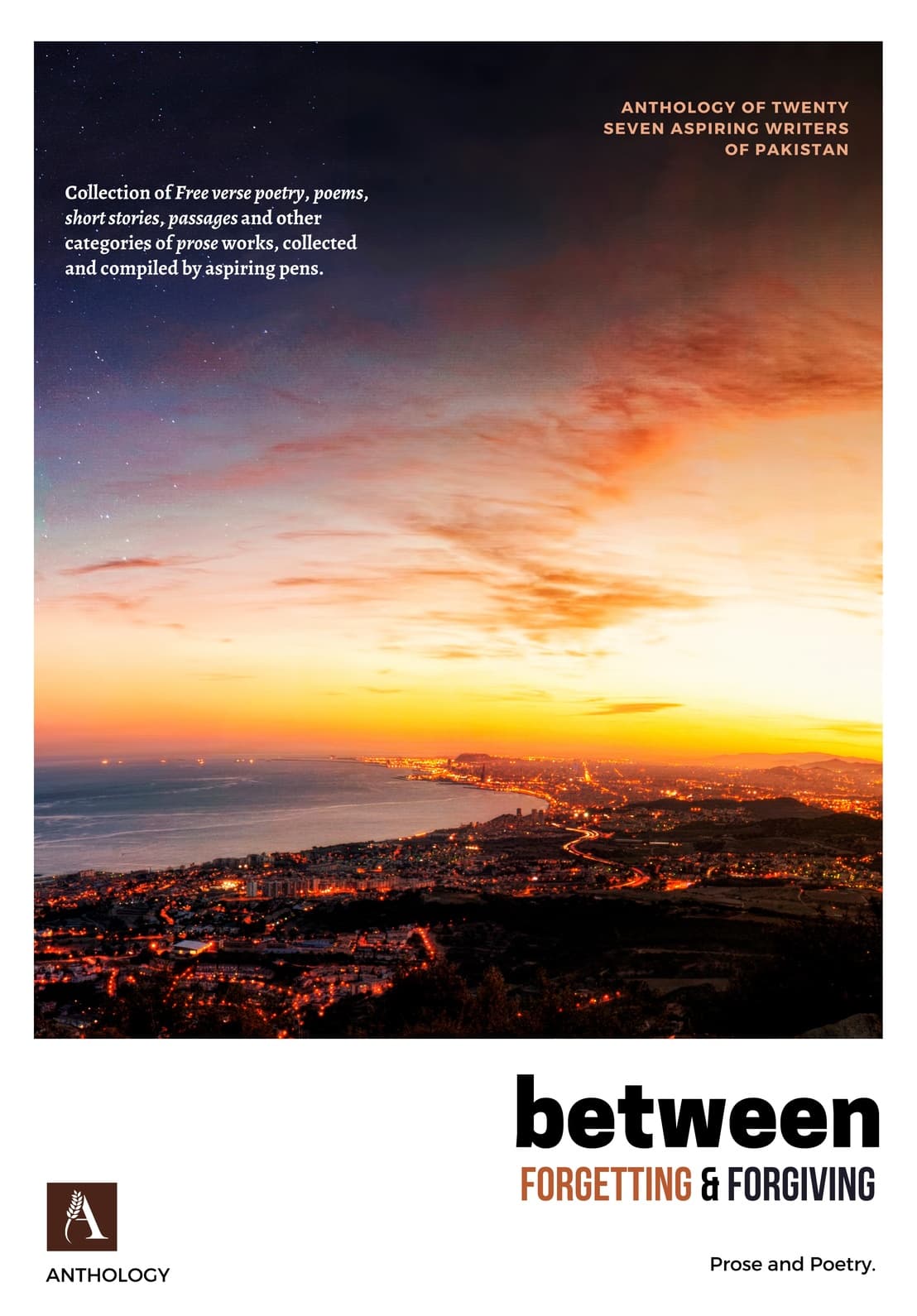
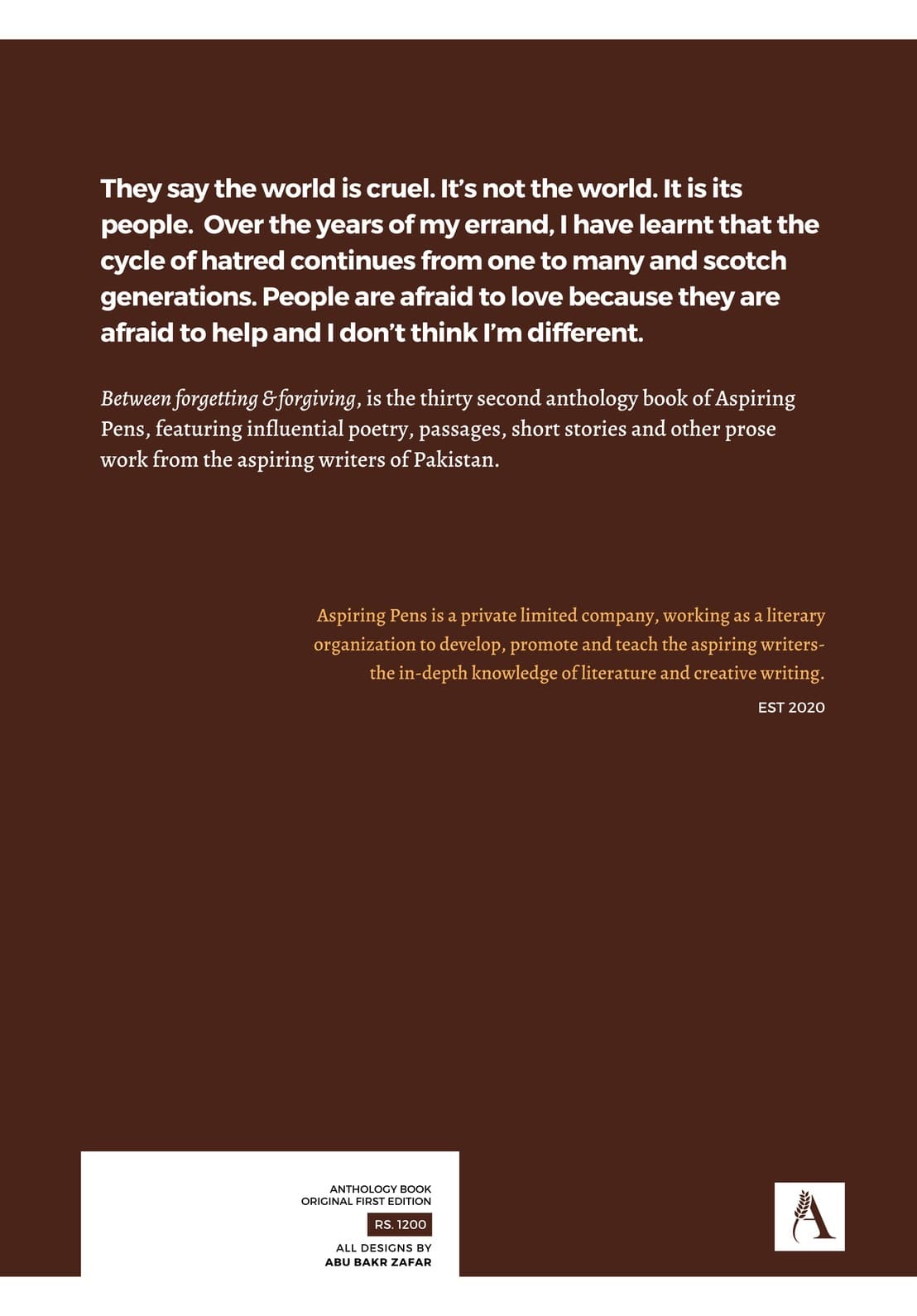
Between Forgetting and Forgiving is a 2022 anthology from Aspiring Pens, featuring free verse poetry, short stories, personal essays, and prose passages from twenty-seven Pakistani writers. The title runs on every page like a quiet reminder, and the writing keeps returning to the same contested ground: pain caused by people we trusted, the cost of staying silent, and the slow, imperfect work of moving forward. Some pieces deal with romantic love and loss, written as unsent letters, private confessions, and raw descriptions of grief that refuses to pass. Others turn toward family, particularly the regret of misreading a sibling, or the damage done when support is given to one person and withheld from another. A thread of mental health runs through the collection too, with several writers naming anxiety, intrusive thoughts, and emotional numbness directly and without apology. There are also philosophical passages that push back on common assumptions, one arguing that time does not heal, another insisting that life is not unfair but people are. The writing ranges from experimental and fragmented to straightforward and conversational, and the quality varies across the twenty-seven chapters. What holds the book together is not a single style but a shared emotional territory: the space between a wound and a choice.