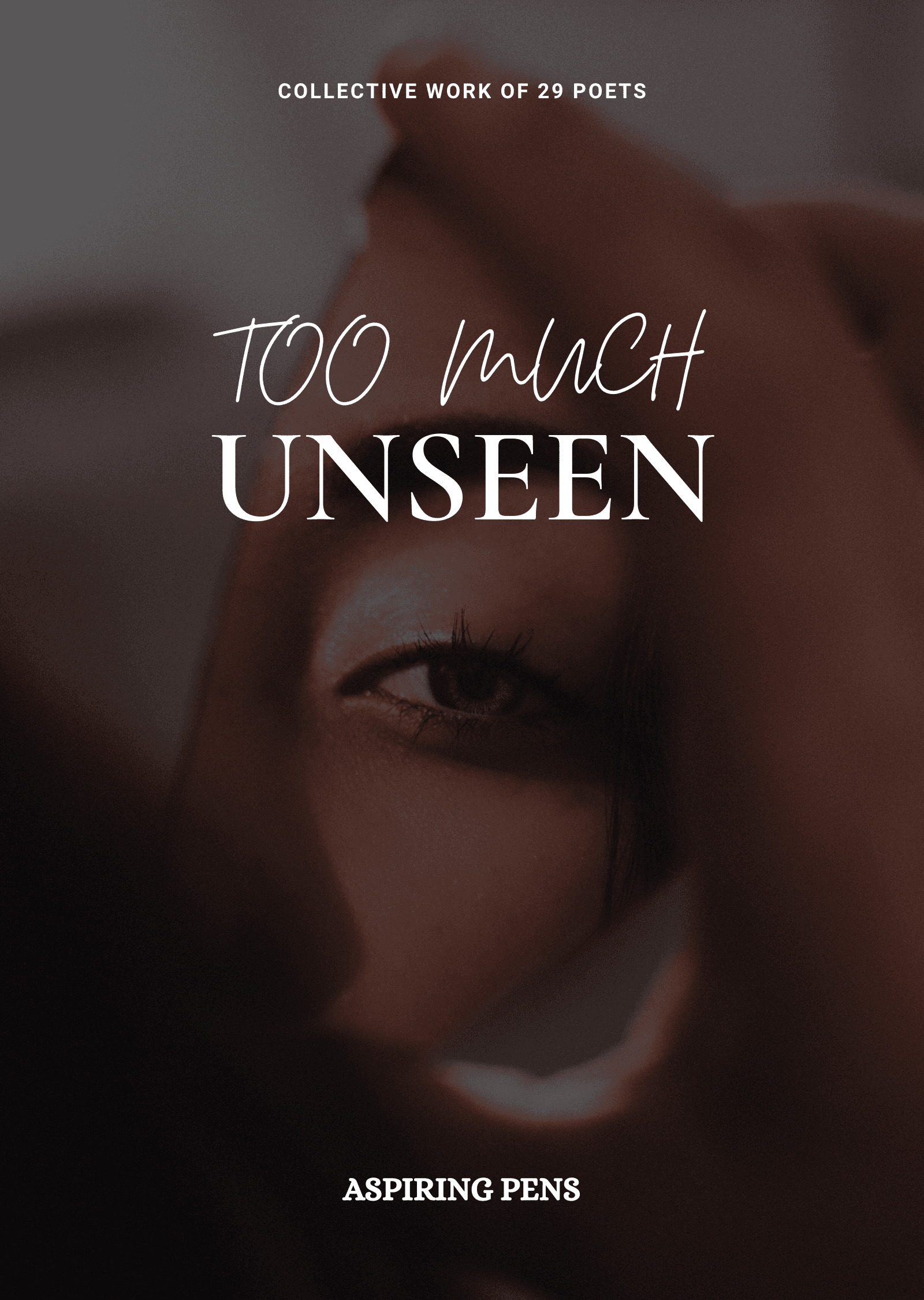
Too Much Unseen is a 2020 poetry anthology published by Aspiring Pens, gathering twenty nine independent poets whose work is united not by a single style or subject, but by a single feeling: that there is far more happening inside a person, and in the world around them, than anyone ever stops to truly see. The title is the book's quiet thesis, woven through every chapter in a different form. Some poets write about romantic love; its dizzying heights, its slow erosions, its aftermath of longing and loss, and in doing so reveal how rarely love itself is fully seen or fairly returned. Others write about grief, about mothers who carry silent sorrows, about fathers whose sacrifices go unacknowledged, about children robbed of their innocence in ways no one speaks of openly. Several voices turn to faith: to Sujood, to Allah's names and attributes, finding in the unseen presence of God what the visible world could not give them. There are poems about mental illness hidden behind smiles, about the invisible suffering of boys told not to cry, about rape survivors whose pain is dismissed, about religious minorities whose humanity goes unrecognized, and about the quiet dignity of those who keep giving even when no one notices. The styles range from delicate, imagistic verse to raw confessional prose, from tightly structured rhyme to loose, breathless free verse, each poet's form as individual as the corner of human experience they illuminate. What runs through all of it, from the first page to the last, is a collective refusal to let these things remain unseen: the book itself is the act of looking, of naming, of finally saying: this was here all along, and it mattered.